
When people talk about successful rowing programs, the focus almost always lands on outcomes: medals, selections, erg scores, championships, and results lists. These metrics are easy to see and easy to measure. Culture, on the other hand, is harder to quantify and harder to explain, and its importance is often underestimated in relation to on-water results.
Yet when you look closely at programs that are consistently successful over many years, a clear pattern emerges: strong results are built on strong culture. Culture is not something that exists separately from performance; it drives it.
Culture is the environment athletes and coaches experience every single day. It shows up in how people speak to each other, how decisions are made, how pressure is handled, and how setbacks are responded to. It determines whether athletes feel safe enough to take risks, motivated enough to work hard, and supported enough to stay when things get difficult. In my experience, culture is not just important to program success; it is the foundation that everything else is built upon.
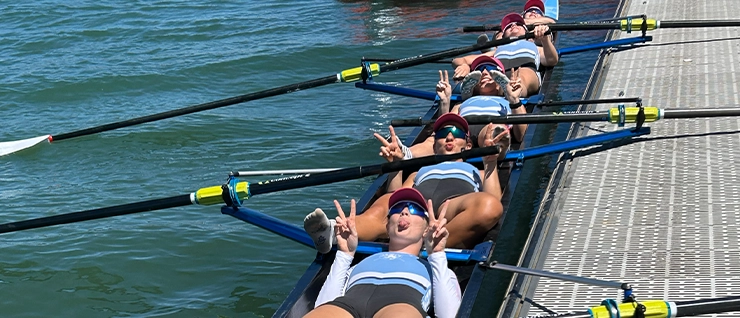
The definition of a "good" culture differs from club to club, depending on its values and mission. Some clubs focus on masters and revolve around inclusion. Some schools simply want to offer students a way to participate and focus on having a good time. Others strive to achieve the highest results possible through an elite culture.
What is important is ensuring that the culture members experience is the one the mission and values purport it to be. I am not suggesting being soft, lowering standards, or avoiding hard conversations. In fact, I am suggesting the opposite: strong cultures allow programs to set higher standards because athletes trust the environment they are in. At its core, a good culture is one where performance, wellbeing, accountability, and consistency coexist.
Athlete mental and physical wellbeing must always sit at the top of the priority list. Without healthy athletes, there is no program, regardless of how talented the squad might be.
This does not mean avoiding hard training. Rowing is demanding, and athletes should be challenged. However, challenges must be appropriate, progressive, and delivered in an environment where athletes feel supported in cases of adversity, rather than disposable if they cannot perform.
A culture that values wellbeing:
When athletes feel that you value their physical and mental health as much as their athletic potential, they are far more willing to commit fully to the work required to succeed.
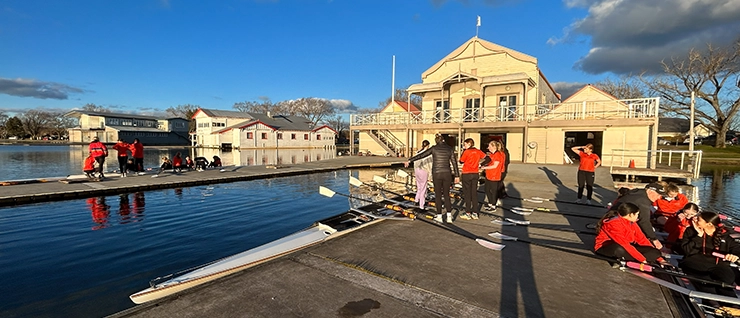
Trust is one of the most valuable currencies in any program. Good cultures are transparent and honest, with expectations for performance, behaviour, and attitude clearly outlined from the beginning and discussed with the athletes. Beyond this, athletes need to trust that leadership will consistently follow through on what they say they will do—even when it is inconvenient, and even when it does not lead to a desired short-term outcome.
This includes:
When leadership is accountable for their actions, and decisions can be clearly explained and understood by the community, athletes and coaches develop confidence in the program. They may not always like the outcome of a process, but they understand why the decision was made and how to influence the outcome in the future. This transparency builds long-term trust between leadership, coaches, parents, and athletes.
A program’s culture is only as strong as the people delivering it. A good culture requires knowledgeable, fair, accountable, and kind coaches. Coaches must feel supported by leadership and confident in their ability to fulfil their role. Importantly, they should not be left guessing or constantly needing to seek help for the basic aspects of their job.
Strong programs deliberately teach their coaches:
When coaches are properly educated and empowered through the trust and support of leadership, they develop ownership over their crews and the agency to make better decisions. This ultimately increases job satisfaction, which directly improves coach retention. In turn, this stability raises the overall standard and consistency of the entire program.
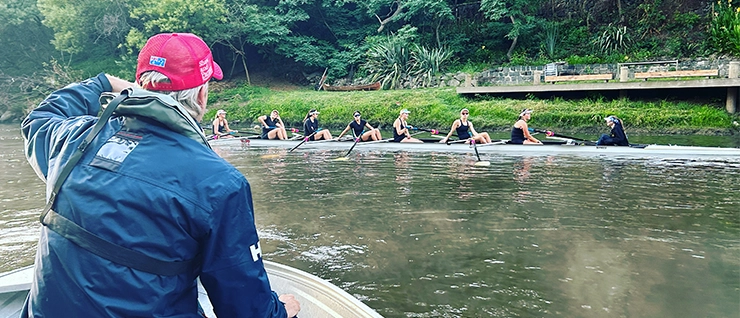
Testing is a necessary part of rowing, but how it is framed makes a significant difference. When positioned correctly, testing is viewed as an opportunity—a chance to demonstrate the work that has been done—rather than a tool used to shame or punish athletes who underperform. Athletes must feel safe to fail if they are to be confident enough to strive for what might otherwise seem impossible.
This shift in mindset:
Healthy cultures also promote positive competition over toxic comparison. In a positive environment, athletes are encouraged to lift each other up and strive to reach the level of the person just ahead of them. When a culture is built on comparison, athletes tend to hide their abilities; they avoid erging next to the strongest rower or lifting weights near someone more capable.
However, when the culture emphasises personal achievement and collective growth, the aim is to rise to the level of the best. Athletes are encouraged to use all resources available to facilitate improvement, including seeking out and training with those who are better than them.
Clear individual goal setting helps athletes understand what they are working towards and how progress will be measured, creating focus and motivation. When developing athletes feel as seen and valued as the top performers, they are far more likely to remain in the program and encourage their peers to join.
A solid culture does not just make a program more pleasant; it makes it objectively faster. When a squad operates with high psychological safety and alignment, the "frictional loss" of interpersonal drama and anxiety is replaced by collective momentum.
A healthy, high-performance culture impacts on-water results by:
By the time a crew reaches the start line, the culture has already done the heavy lifting. It has dictated the quality of every stroke taken in training, the depth of the talent pool available for selection, and the resilience the athletes bring to the final 500 metres.

Ultimately, the true measure of a strong, supportive culture is found in the sustainable cycle of success it creates. When athletes feel supported to lean into the uncomfortable work of training without the fear of failure, they develop the mental maturity to manage their wellbeing and performance concurrently. This shift not only reduces burnout and injury but leads to a program that people genuinely want to join and, more importantly, stay in.
A healthy environment acts as a magnet for high-calibre athletes, creating a deeper pool of talent and making selection a contest of strengths rather than a search for the "least worst" option. This stability extends to the coaches; when they are informed, empowered, and supported by leadership, their job satisfaction leads to long-term retention. Instead of restarting every season, the program builds a legacy of collective knowledge and technical consistency. By investing in the health of the culture, you aren't just improving the athlete experience—you are building the most robust engine possible for consistent, high-level results on the water.


Nicki was my coach throughout my entire rowing journey at school, and she completely transformed the way I approached the sport. Her technical focus was next level, every session centred on quality over quantity. We constantly reviewed video footage, breaking down each stroke to make small but powerful improvements. She placed a big emphasis on controlling the controllables. From nutrition and recovery to mindset, ensuring we fuelled our bodies and trained smart. She was incredibly knowledgeable and supported each athlete's individual journey all the way to their peak performance.
Selected as stroke seat of Australian Under 19 Eight

Ratio Theory Rowing - Copyright . All rights reserved.
At Ratio Theory, we combine technical knowledge with strategic planning to help you gain back control, row faster, train smarter and perform at your best when it counts.