
As athletes, we often hear the word resilience thrown around. We're told it's important, that we need it, that it's what separates the good from the great
But what is resilience? What does it actually do, what's it good for, and most importantly, how do we build it?
Psychological resilience is the process of adapting well when faced with adversity, stress, or significant challenge. It's not about suppressing emotion or “toughing it out.” It's about managing disruption, using available resources effectively, and returning to a functional state.
Research in sport psychology shows that resilience and performance are closely linked.
Resilience is particularly relevant for young female rowers. The adolescent years combine peak physical development with heightened emotional sensitivity. Female athletes often face added stressors: body image concerns, perfectionism, comparison, and the internalisation of emotion.
While sport participation can boost mood and self-esteem, the same environment can also intensify psychological pressure. Without effective coping skills, stress accumulates and undermines both performance and enjoyment.

Resilience doesn't develop in isolation — it's shaped daily through the coach-athlete relationship. Evidence shows that supportive coaching, especially when tailored to individual needs, strengthens resilience
Three consistent tools I use:
1. Assessing Personal Assumptions
Athletes often escalate emotionally without recognising what triggered it. We break this down by analysing the specific event, thought, and response sequence. Understanding
that link allows the athlete to see how their perception shapes their reaction. Once aware, they can intervene earlier and with greater control.
2. Disputing Negative Thinking
During stressful times, when effort drops or motivation slips, it's rarely due to lack of willpower. It's the product of unchallenged internal dialogue. We actively counter
unhelpful thoughts (“I can't do this,” “I'm falling behind”) with evidence-based reasoning and practical reframing. This doesn't mean forced optimism; it means accuracy over assumption.
3. De-Catastrophising
Rowers are prone to all-or-nothing thinking. One bad piece means I am not good enough. We train the ability to step back, examine the situation accurately, and consider multiple
outcomes. That wider perspective reduces panic and restores decision-making capacity.
Beyond these structured tools, mental resilience develops through consistent habits:

Resilient rowers maintain composure under pressure, learn efficiently from mistakes, and return from setbacks faster. They experience lower distress, fewer injuries, and more stable long-term development.
For coaches, resilience isn’t an abstract quality — it’s a measurable, trainable skill that underpins both performance and athlete wellbeing.
At Ratio Theory, it’s integrated into every aspect of coaching: technical, physical, and psychological. Because in rowing, the ability to recover — from a bad stroke, a bad session, or a bad season — is what ultimately defines progress.
References
Eddy Marheni et al., 'Development of Mental Education through Sports to Enhance Adolescent Personal Resilience', Journal of Human Sport Sciences, Issue 19 (2024) [accessed 30 October 2025].
Kimberly H. McManama O'Brien et al., 'Psychological Resilience in Young Female Athletes', International Journal of Environmental Research and Public Health, Issue 18 (2021) [accessed 30 October 2025].
Robert J. Schinke et al., 'A Protocol for Teaching Resilience to High Performing Athletes', Journal of Excellence, Issue 9 (2004) [accessed 30 October 2025].
Seyedeh Asma Hosseini and Mohammad Ali Besharat, 'Relation of Resilience with Sport Achievement and Mental Health in a Sample of Athletes', ScienceDirect (2010) [accessed 30 October 2025].

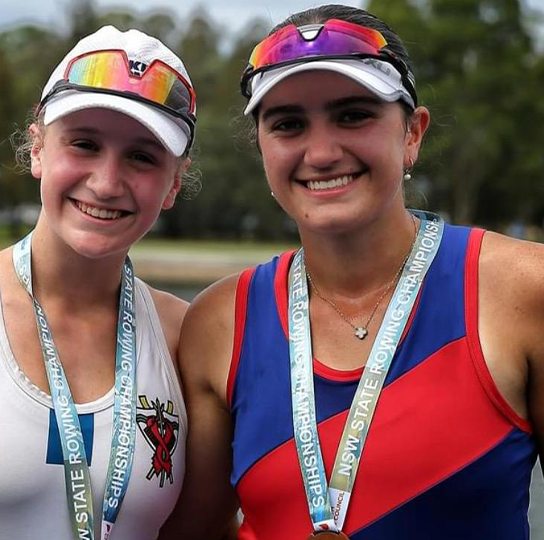
Nicki helped make such a difference to my rowing. She created an environment that was super supportive, where we wanted to work hard. She knows when you need a push or help calming the nerves and I felt like I was improving without feeling overwhelmed. I'd definitely recommend her to anyone who wants a coach who truly cares and brings out your best.

Ratio Theory Rowing - Copyright . All rights reserved.
At Ratio Theory, we combine technical knowledge with strategic planning to help you gain back control, row faster, train smarter and perform at your best when it counts.