
Rowing is a sport where success is measured in fractions of a second, yet most rowers focus almost exclusively on what happens on the water or in the gym. Stroke rate, power output, split times, erg scores — they're all critical. But if you're not paying attention to recovery, none of that effort will translate into performance gains.
Recovery is where the hard work you put into technique, strength, and endurance actually turns into speed. It's not just rest days—it's sleep, nutrition, active recovery, stretching, and injury prevention, all tuned to the unique demands of rowing.
Rowers are notorious for “more is better” thinking. Overtraining without structured recovery can stall progress or lead to injury. Common mistakes include:
Active recovery is crucial. Light rowing, mobility drills, or core work after intense sessions helps flush lactic acid, maintain blood flow, and reduce soreness. Studies suggest 6-10 minutes post-training is often ideal.
Key takeaway: Don't skip your recovery sessions — they're where progress actually happens.
Rowers know the feeling: heavy legs, or that inexplicable urge to get angry at junior rowers who “get in our way” (we've all been there). Much of this comes down to sleep.
Elite rowers training multiple sessions a day may need 10-12 hours of sleep to fully recover. Even young, high-performing juniors may require up to 10 hours. Sub-elite athletes training 2-3 hours per day need slightly less but should still aim for 7-9 hours, away from work, uni, school, and yes—your phone.
Lack of sleep reduces reaction times, motor coordination, and emotional stability—critical for technical boats like the quad or eight, where timing is everything. Sleep deprivation is also a red flag for under-recovery, especially during heavy training blocks or travel-heavy competitions. This can lead to injury or illness at the most inopportune times.
Key takeaway: Track your sleep and aim to feel alert for every session. Note the number of times you struggle to fall asleep or wake up, and see if you can make small changes to your routine

Rowing demands enormous energy. Each training session taxes multiple systems—from anaerobic bursts during starts to sustained aerobic power during a 2k race. Your body needs the right fuel to repair and adapt.
Timing matters too. Pre-row meals, on-water fuel (especially for doubles or long pieces), and post-session refueling all help maximize performance and adaptation.
Making the right choices isn't about labeling foods “good” or “bad,” but thinking about what your body actually needs. This might mean thinking twice before making hot chips or a block of chocolate your pre-race snack (you know who you are).
Key takeaway: Fuel your training smartly — it really does make a difference.
Rowing is repetitive. Thousands of strokes create tension in hips, hamstrings, shoulders, and lower back. Poor mobility or muscle stiffness reduces stroke efficiency and increases injury risk.
Focus areas
At Ratio Theory, it's integrated into every aspect of coaching: technical, physical, and psychological. Because in rowing, the ability to recover — from a bad stroke, a bad session, or a bad season — is what ultimately defines progress.
Key takeaway: Stretch smart, move well, and keep your body ready for action.
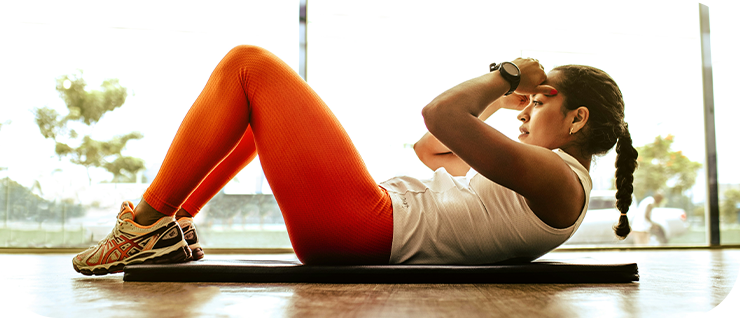
Repetitive movements make rowers prone to injuries: low back strain, rib stress, wrist tendonitis. Prevention is a core part of staying recovered and ready.
Consistency—whether in warm-ups or dryland circuits—reduces injury and allows rowers to maintain uninterrupted training blocks.
Key takeaway: Protect your body proactively so you can train consistently.
Rowers often ask, “How can I get faster?” but then disengage once they leave the boathouse. The answer isn't always more meters or heavier weights. Prioritizing recovery, fueling, and injury prevention off the water might be where those extra 1% gains live—the difference of half a boat length.
Action points:
The best rowers aren't just the hardest workers—they're the smartest. Recovery is your invisible oar; without it, the boat goes nowhere fast.

If you're finding it hard to balance your training load and recovery—or if you're constantly tired, sore, or unsure how to structure your rest—I can help.
At Ratio Theory Rowing, I work with rowers to build programs that balance hard training with effective recovery so every stroke counts. Whether you're chasing selection, rebuilding confidence after time off, or just trying to feel stronger on the water, recovery is the missing piece that ties it all together.
Get in touch to find your rhythm between effort and rest—so you can go faster, for longer.
References
Bird, S.P., 2013. Sleep, recovery, and athletic performance: A brief review and recommendations. Strength and Conditioning Journal, 35(5), pp.43-47. doi:10.1519/SSC.0b013e3182a62e2f.
Emery, C.A. & Pasanen, K., 2019. Current trends in sport injury prevention. Best Practice & Research Clinical Rheumatology, 33(1), pp.3-15.
Kellmann, M., 2010. Enhancing recovery: Preventing underperformance in athletes. Champaign: Human Kinetics.
Kellmann, M., Bertollo, M., Bosquet, L., Brink, M.S., Coutts, A.J., Duffield, R., Meeusen, R., Mester, J., Robazza, C., Saw, A.E., Schwellnus, M.P. & Raglin, J., 2018. Recovery and performance in sport: Consensus statement. International Journal of Sports Physiology and Performance, 13(2), pp.240-245.
Ortiz, R.O., Sinclair Elder, A.J., Elder, C.L. & Dawes, J.J., 2019. A systematic review on the effectiveness of active recovery interventions on athletic performance of professional-, collegiate-, and competitive-level adult athletes. Journal of Strength and Conditioning Research, 33(8), pp.2275-2287. doi:10.1519/JSC.0000000000002589
Thomas, D.T., Erdman, K.A. & Burke, L.M., 2016. Nutrition and athletic performance. Medicine and Science in Sports and Exercise, 48(3), pp.543-568. doi:10.1249/MSS.0000000000000852

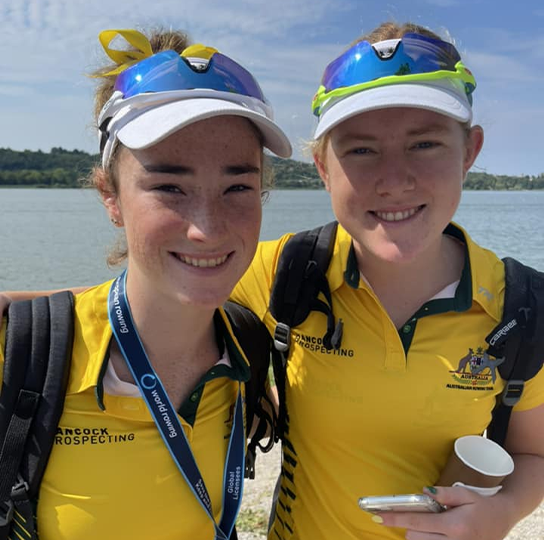
Nicki was my coach throughout my entire rowing journey at school, and she completely transformed the way I approached the sport. Her technical focus was next level, every session centred on quality over quantity. We constantly reviewed video footage, breaking down each stroke to make small but powerful improvements. She placed a big emphasis on controlling the controllables. From nutrition and recovery to mindset, ensuring we fuelled our bodies and trained smart. She was incredibly knowledgeable and supported each athlete's individual journey all the way to their peak performance.
Selected as stroke seat of Australian Under 19 Eight

Ratio Theory Rowing - Copyright . All rights reserved.
At Ratio Theory, we combine technical knowledge with strategic planning to help you gain back control, row faster, train smarter and perform at your best when it counts.